
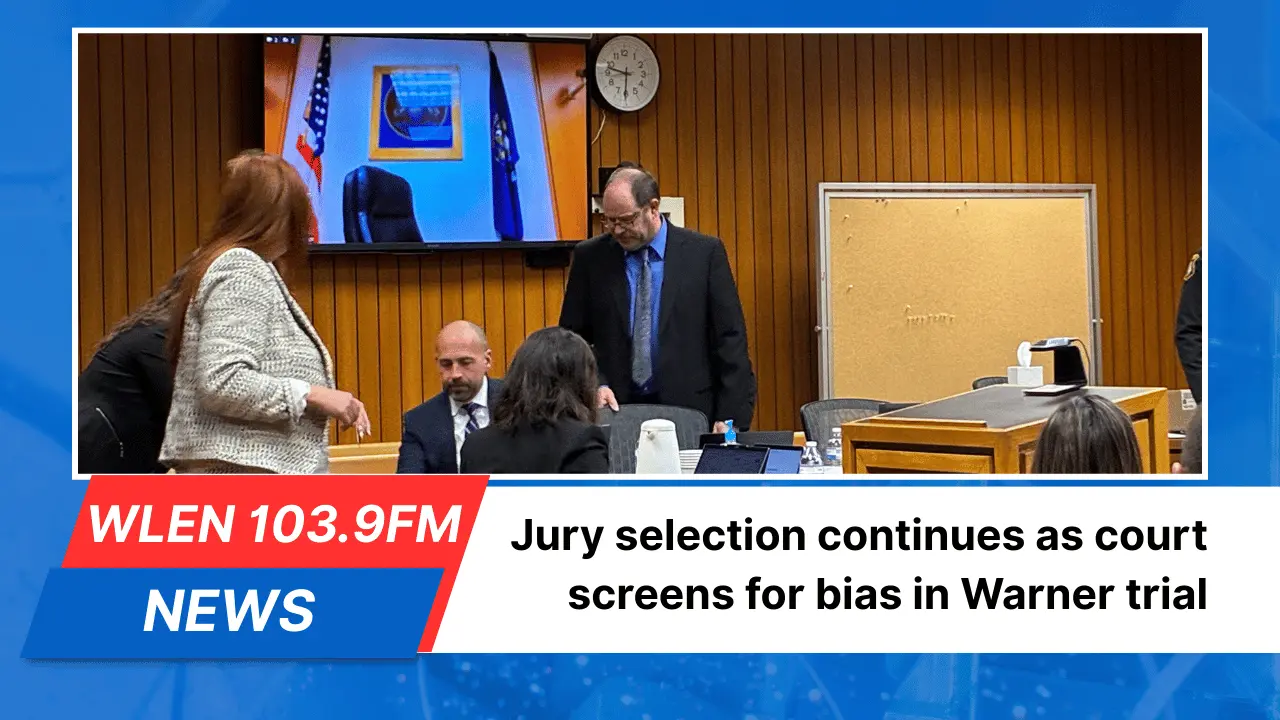
ADRIAN — Jury selection continued Wednesday in the murder trial of Dale Warner, with court proceedings highlighting the difficulty of seating an impartial jury in a case that has drawn extensive public attention.
The trial is being held in Lenawee County Circuit Court before Judge Michael Olsaver. Warner is charged with open murder and tampering with evidence in connection with the death of his wife. He has pleaded not guilty.
During the second day of voir dire, attorneys questioned prospective jurors about prior exposure to the case, including news coverage, documentaries, social media activity, and conversations within the community. Several potential jurors were dismissed after stating they had already formed opinions or could not assure the court they would decide the case solely on evidence presented at trial.
Court proceedings also reflected close examination of potential jurors’ involvement in case-related advocacy. Prospective jurors who acknowledged participation in online advocacy connected to the case were dismissed during questioning, as the court assessed whether those connections could affect impartiality.
In particular, discussion during voir dire included reference to online posts associated with the Justice for Dee Facebook page that addressed jury nullification. Jury nullification refers to a situation in which jurors disregard the law or evidence presented at trial in order to reach a verdict based on personal beliefs. Court questioning focused on whether exposure to such material could interfere with a juror’s ability to follow the law and decide the case solely on the evidence.
Under Michigan law, the trial court has broad discretion in managing jury selection, including the scope of questioning, so long as the process is sufficient to ensure a fair and impartial jury. The court’s role during voir dire is to balance efficiency with the need to identify bias that could interfere with a juror’s ability to evaluate the evidence fairly.
The anticipated length of the trial also factored into jury screening. The court indicated the trial could last several weeks, prompting questions about employment obligations, financial hardship, and personal responsibilities. Some potential jurors were excused after stating that those issues could affect their ability to serve without distraction.
Court officials anticipated a high level of attrition during jury selection. Regional reporting has indicated that several hundred potential jurors were summoned for the case due to its public profile.
Jury selection is expected to continue as the court works to seat a full panel before opening statements can begin.